What Is a Studor Vent? A Practical AAV Guide
Learn what is a studor vent, how AAVs work, where codes permit them, and how dual-seal alternatives support code-aware plumbing decisions.
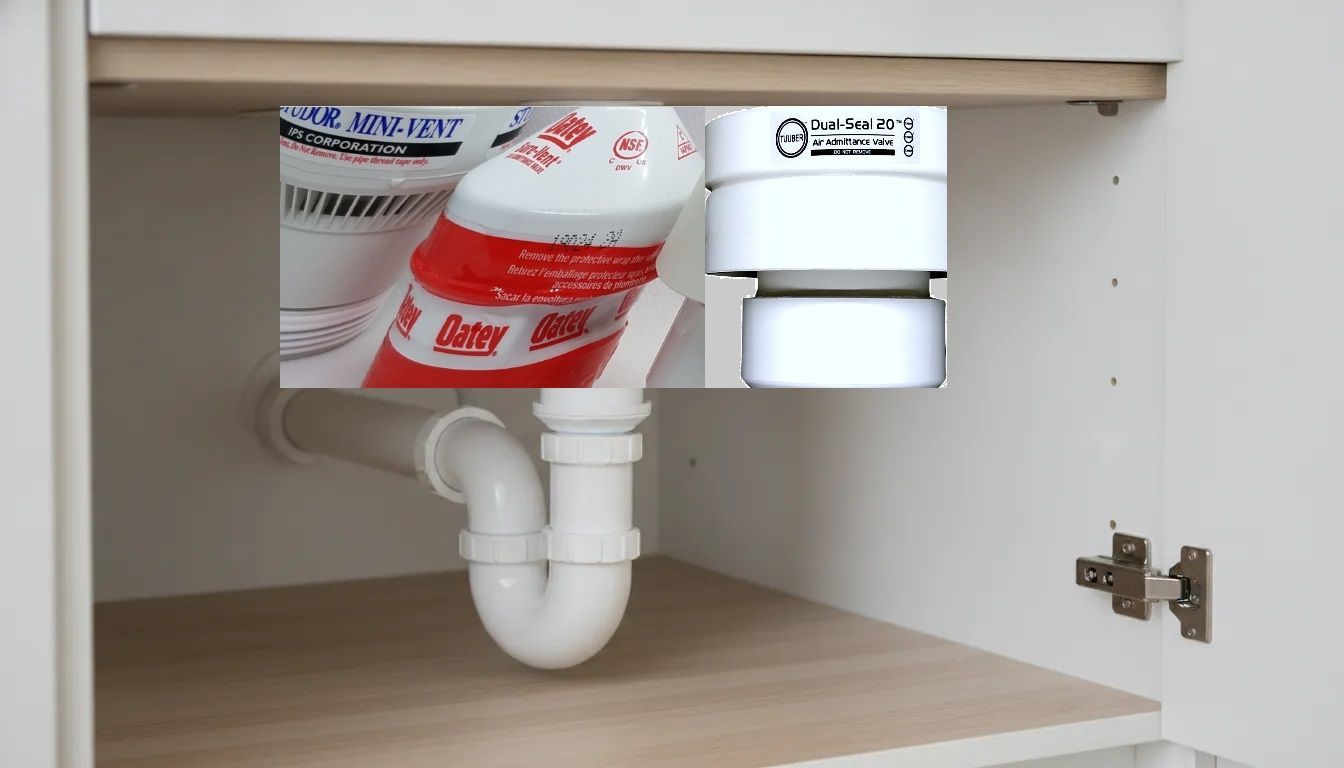
When a sink or other fixture is far from a practical roof vent, an air admittance valve can provide local venting without routing a new connection through the building. If you are asking what is a studor vent, the short answer is that it is a brand-associated name for a one-way air admittance valve, or AAV. The broader AAV category, rather than the brand name alone, determines the relevant specifications, installation limits, and code questions. For a wider product comparison, review Tuuber's air admittance valve comparison and product selection guide.
What is a Studor vent? A Studor vent is a common industry term for an air admittance valve. It is a one-way mechanical valve that admits air when drainage creates negative pressure, then closes to help protect a fixture trap seal. It is not a substitute for every vent in every layout. The adopted code and local authority determine where a specific AAV may be used.
The name is often used casually, but the distinction between a brand and a product category matters when selecting a valve. The sections below explain the operating cycle, model and sizing checks, code considerations, and the design questions to ask when comparing a Studor vent with another AAV.
What Is a Studor Vent? The Brand Name Behind an AAV
Answer: A Studor vent is a brand-associated air admittance valve, or AAV. It is a one-way mechanical valve that admits air when drainage creates negative pressure, then closes to help protect a fixture trap seal. It does not replace every vent, and local code controls where it may be installed.
Studor is a brand name, while AAV is the broader category. In everyday conversations, contractors, inspectors, and homeowners may use the terms interchangeably. That shorthand is understandable, but a specification should identify the actual valve, listing or certification information, connection size, application, and installation instructions.
Studor is a brand, AAV is the valve category
An AAV is installed near a fixture or fixture group. It admits air into the drainage, waste, and vent system when the system needs it, while its one-way design limits air from escaping through that opening. This local approach can provide fixture venting without connecting that fixture directly to a larger vent stack. Oregon building guidance describes an AAV as a locally installed, one-way mechanical valve.
That arrangement can be useful where a beam, cabinet layout, island, or existing structure makes a conventional vent connection difficult. It does not remove the need to evaluate the complete DWV design. The valve must be placed and supported as the manufacturer directs, remain accessible, and comply with the code adopted at the project location.
What the valve is designed to do
When the drain system develops negative pressure, the valve opens and lets air enter. When pressure equalizes, the internal member returns to its closed position. The objective is to reduce pressure effects that could siphon water from a fixture trap. It is a local pressure-balancing function, not a universal replacement for a roof vent or for every part of a vent system.
For that reason, the best answer to "what is a studor vent" includes both the definition and the limitation. It is an AAV used for a permitted application. The name alone does not establish capacity, code approval, or suitability for a particular fixture group.
How Does Studor Venting Work When a Drain Flows?
Answer: Studor venting works through a pressure-responsive, one-way valve. When flowing wastewater creates negative pressure, the valve opens and admits air. When pressure equalizes, gravity closes the valve. This helps limit trap-seal siphoning, but an AAV does not provide positive-pressure protection or replace every roof vent.
A Studor-style AAV responds to pressure changes inside the DWV system. The operating sequence is straightforward:
Drainage creates negative pressure. Water and air moving through a drainage pipe can reduce pressure in a branch line. That pressure change can act on nearby fixture traps.
The valve opens. The pressure difference moves the internal sealing member, allowing air to enter through the valve. This helps balance the negative pressure near the fixture.
The trap seal receives support. By reducing the negative-pressure effect, the valve helps limit siphoning and protects the water barrier in the trap.
The valve closes. Once pressure equalizes, gravity returns the internal member to its closed position. The closed valve limits the escape of air and sewer gas through the AAV.
What happens during positive pressure?
An AAV is designed primarily to respond to negative pressure. It does not provide the same function as an open vent for positive-pressure relief. Oregon guidance explains the relationship between gravity-activated AAVs and trap-seal protection, including the importance of a properly designed vent system.
Unusual gurgling, recurring trap-seal concerns, sewer-gas odor, or drainage behavior that changes after an AAV installation should prompt a review of the branch layout, valve placement, access, and local requirements. Do not assume that replacing the valve alone resolves a pressure or drainage problem. Fixture load, pipe configuration, and the authority having jurisdiction all influence whether the installation is appropriate.
Studor Vent Sizes and Models: What Should You Check?
Answer: Choose a Studor vent by matching the exact model to connection size, fixture and drain load, installation position, access, product instructions, and local approval. Model names such as Mini-Vent, Mini-Redi, and Maxi-Redi do not establish capacity by themselves. Verify current manufacturer documentation before installation.
Model selection is not a matter of choosing the largest valve. Mini-Redi, Maxi-Redi, and Mini-Vent are product-line terms, while AAV describes the broader valve category. Start with the exact product documentation, then confirm the connection, application, location, and permitted load for the complete layout.
Studor model terminology and selection checksTerm or modelWhat it tells youWhat to verifyMini-VentA compact Studor AAV name. Product listings describe Mini-Vent products for 1-1/2-inch or 2-inch pipe connections.Confirm the exact connection, fitting arrangement, fixture load, and current installation instructions.Mini-RediA Studor AAV line name used in product selection discussions.Do not infer capacity from the word "Mini." Check the specific model documentation and application limits.Maxi-RediA Studor AAV line name for a different product format.Confirm connection requirements, drain-system application, clearance, access, and approval.AAVThe general term for a one-way mechanical air admittance valve.Verify listing, applicable standards, local approval, installation details, and manufacturer limits.
Five checks that prevent a sizing mistake
Connection size: Match the valve and fittings to the installed pipe, not only the fixture outlet.
Fixture and drain load: Identify every fixture served. Do not assign a DFU rating or assume a model can serve multiple fixtures unless current documentation says so.
Installation position: Confirm orientation and placement. An AAV must be able to open under negative pressure and close as designed.
Access: Keep the valve reachable for inspection and replacement. Permanent concealment can turn a routine service issue into a costly opening.
Code and instructions: Product selection does not by itself make an installation permitted. Review the adopted code, ask the AHJ when uncertain, and follow the exact instructions. Tuuber's code-compliant air admittance valve guide provides additional context.
Where Are Studor Vents Code-Permitted in the United States?
Answer: Studor vents may be permitted where the adopted code, product listing, installation conditions, and authority having jurisdiction allow AAV use. There is no universal nationwide answer. Confirm local code, permit and inspection requirements, applicable ASSE documentation, placement, access, and application limits before rough-in.
A product can meet a recognized performance standard and still be limited by the code adopted by a state, municipality, or special district. Project type also matters. New construction, remodeling, repair, residential work, and commercial work may not be treated identically.
Start with the adopted code and the AHJ
Before specifying a valve, identify the governing code edition and ask the AHJ how it applies to the proposed fixture group. Confirm whether an AAV is allowed for the location, whether a relief or roof vent is required, how the valve must be positioned, and what access is expected. A contractor should resolve these questions before closing walls or installing permanent finishes.
Public guidance can help frame the discussion, but it is not a substitute for the local determination. Tuuber's AAV code guide is a useful starting point for reviewing common requirements and documentation.
Why ASSE 1050 and 1051 matter
ANSI/ASSE 1050 and ANSI/ASSE 1051 are important references when evaluating AAV performance documentation. The applicable standard depends on the valve type and intended application. A project specification should match the product documentation to the proposed use rather than treating one standard as a blanket approval for every layout.
Local officials may also ask for product listing details, manufacturer instructions, and evidence that the proposed installation follows the adopted code. Portland's official air admittance valve determination illustrates why local rules and project conditions belong in the approval conversation.
Common situations that need careful review
AAVs are often considered where structural conditions make a conventional vent impractical. Examples include an island sink, a fixture isolated from an existing vent, or a remodel where opening finished construction would be disruptive. These examples do not create automatic permission. Review indoor location, access, clearance, fixture load, drain arrangement, and the manufacturer's instructions together.
Remember that an AAV addresses negative-pressure conditions. It does not automatically replace all roof venting or protect against every positive-pressure event. Treat it as one component of a properly designed system, and have the complete arrangement reviewed by the AHJ when the code pathway is unclear.
Why Consider a Dual-Seal AAV Alternative to a Studor Vent?
Answer: A dual-seal AAV is an alternative worth evaluating when a project calls for added sealing redundancy. Tuuber's Dual-Seal 20 design uses two sealing interfaces, while conventional single-seal designs rely on one primary interface. Compare code pathway, sizing, access, instructions, and the complete DWV layout before selecting any valve.
The practical comparison is not simply one brand versus another. It includes valve architecture, installation requirements, applicable standards, and the level of sealing redundancy built into the product. A conventional single-seal design relies on one primary sealing interface. Tuuber positions its Dual-Seal 20 around two sealing interfaces intended to add redundancy. Review the air admittance valve comparison and product selection guide for a broader evaluation framework.
Single-seal and dual-seal designs
All AAVs must manage the same basic task: allow air to enter when negative pressure develops, then limit air escape when the valve closes. A single-seal design depends on one sealing interface to maintain that closed condition. Seal condition, debris, chemical exposure, wear, and installation quality can all affect long-term performance.
Dual-seal technology approaches the same function with an additional sealing interface. For an installer, that difference may matter where access is limited, a callback would be disruptive, or a valve is being selected for a long-term maintenance plan. The design feature should be evaluated alongside, not instead of, code approval and application fit.
See Tuuber's dual-seal AAV product information for stated design features. For troubleshooting context, review the guide to common AAV failure modes.
A practical selection checklist
Confirm the application: Identify the fixture group, pipe size, installation location, and whether a conventional vent connection is practical.
Check local requirements: Confirm the adopted code, permit needs, inspection expectations, and AHJ position.
Verify standards: Review documentation relevant to ASSE 1050 or 1051 where those standards apply.
Plan for access: Install the valve where it can receive air and remain accessible for inspection or replacement.
Evaluate sealing architecture: Compare whether the valve uses a single-seal or dual-seal design and what redundancy that architecture provides.
A dual-seal AAV is not a substitute for reviewing the entire DWV layout. Use the product instructions, applicable code, and AHJ direction together. That process lets an installer select an alternative for verified application fit, code pathway, service access, and sealing design.
Frequently Asked Questions
What is a Studor vent?
A Studor vent is a common industry term for an air admittance valve, or AAV. It is a one-way mechanical valve installed near a fixture that admits air into the drainage system when negative pressure develops. The selected valve and installation must comply with the adopted code and manufacturer instructions.
How does a Studor vent work?
When draining water creates negative pressure in the pipe, the valve opens and admits air. It closes when pressure equalizes, helping protect the fixture trap seal. An AAV does not provide protection from positive-pressure events, so it is not a complete substitute for every part of a vent system.
Does a Studor vent replace a vent pipe?
It can replace a local vent connection in an application where an AAV is permitted, but it does not automatically replace the entire plumbing vent system. Follow the adopted code, the AHJ's direction, and the valve manufacturer's installation instructions.
Are Studor vents allowed by plumbing code?
Permission varies by state, municipality, building type, and application. Confirm the current local code, permit and inspection requirements, product listing, access rules, and any limitations before installation. ASSE documentation can support the review but does not create universal permission.
What should I check when replacing one?
Match the replacement to the pipe connection, fixture load, installation position, access requirements, and local code approval. Confirm current sizing and installation instructions. If comparing designs, check the seal architecture and the redundancy it provides.